Tutorials and Explanatory Articles

plastic recycling
Information Article

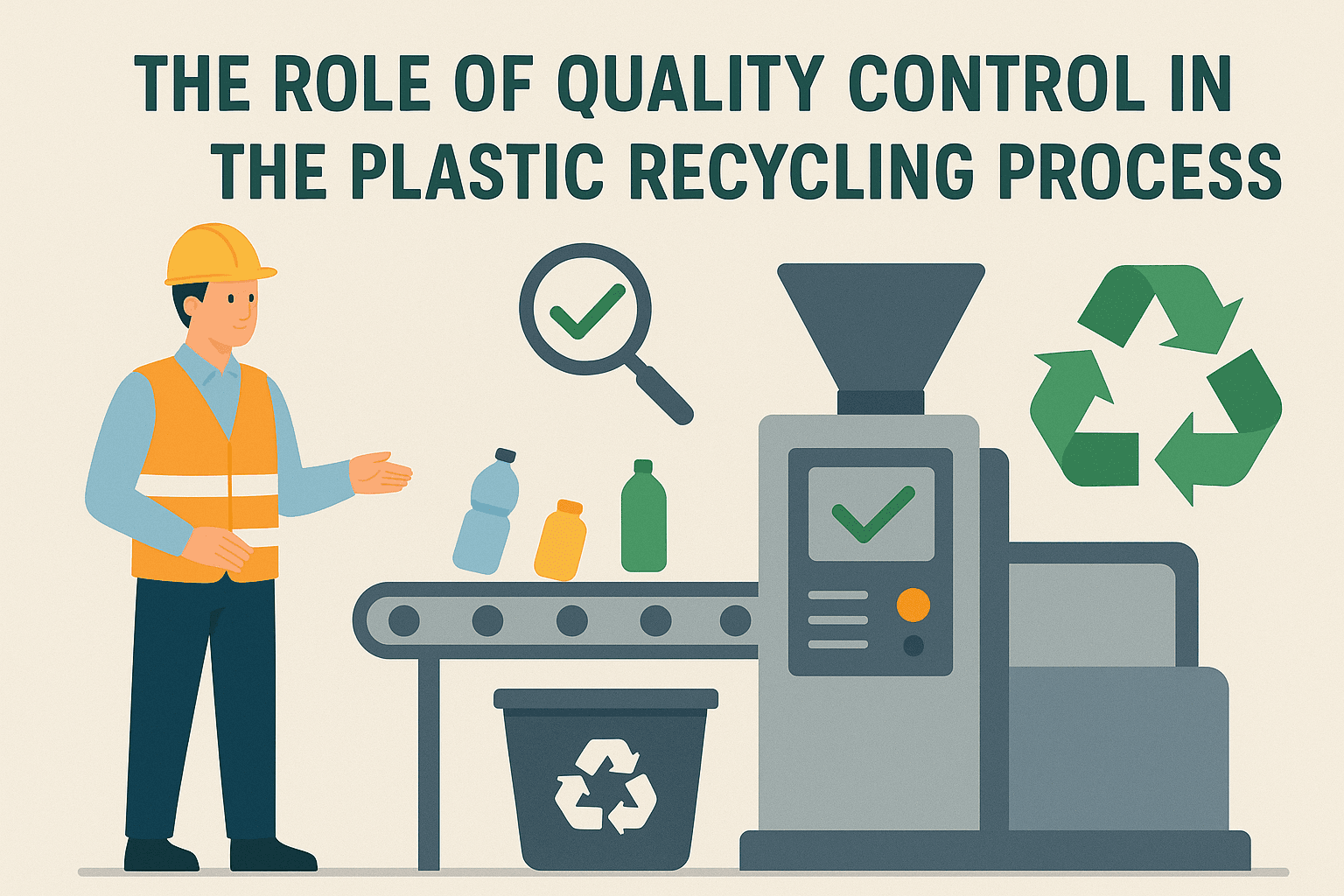
The Role of Quality Control in the Plastic Recycling Process

In this article, you will find why quality control is critical in plastic recycling, the main testing methods such as MFI testing, density measurement, thermal analyses, moisture and ash content determination, the quality variations encountered in recycled plastics, and the reliable quality control solutions offered by Alarge.

Quality Control in PVC Profile Production: Processes, Devices and Why It Matters

In today’s competitive manufacturing world, PVC profile production plays a key role in various industries such as construction, windows and doors, and cable insulation. To ensure high-quality and reliable products, strict control of production parameters and post-production testing are essential. This is where quality control devices and a well-structured PVC profile quality process come into play. In this blog post, we will walk you through the importance of PVC quality tests, the essential PVC laboratory equipment, and each step involved in the quality control of PVC profiles. You’ll also learn why choosing reliable equipment like those offered by Alarge can make a real difference in your production. Where Are PVC Profiles Used? PVC profiles are widely used in construction for window and door frames, facade systems, curtain rails, wall panels, and even furniture edges. The wide usage requires profiles to have consistent dimensions, surface finish, flexibility, and durability. Quality variations can lead to product failure, customer complaints, and regulatory non-compliance. Why Quality Control Is Essential in PVC Profile Production PVC profiles must meet strict standards to ensure performance under mechanical, thermal, and environmental stress. An effective PVC profile quality process reduces the risk of defective batches, ensures compliance with ISO standards, and increases customer satisfaction and brand trust. Accurate PVC quality tests help to detect irregularities in raw materials and final products, thus preventing losses and ensuring a stable manufacturing process. 🔎 Detailed Breakdown of Quality Control Devices Each device below plays a crucial role in one or more stages of the quality process: 1. Digital Caliper and Wall Thickness Gauge These mechanical measurement tools are used to check the dimensional accuracy of the profiles. Measurements like thickness, width, internal/external diameter must be within tolerance limits defined by standards such as ISO 3633 or DIN EN 12608. 2. Universal Testing Machine (UTM) This device is used to perform tensile and compression strength tests. It’s critical for ensuring that the PVC profiles can withstand mechanical loads during installation or usage. Standards: ISO 527 (Tensile Strength) ASTM D638 3. Charpy or Izod Impact Tester Measures the profile’s resistance to sudden force or drop. Particularly important for profiles used in cold environments. Standard: ISO 179 or ASTM D256 4. Vicat Softening Point Tester Determines the temperature at which PVC softens. This is especially important in profiles used in environments with temperature fluctuations. Standard: ISO 306 5. Melt Flow Index Tester (MFI) Analyzes the flow properties of raw material or recycled granules to ensure consistent viscosity. Standard: ISO 1133 6. Gravimetric Density Kit (Density Measurement) Used to determine the density of PVC samples to detect material inconsistencies or improper compounding. Standard: ASTM D792 7. Precision Analytical Balance Ensures accurate weighing of samples during density or formulation testing. Must have a readability of at least 0.1 mg. 8. Laboratory Oven (Etüv) Used for pre-conditioning samples or drying them before tests. Stable temperature control is vital. Standard: ISO 291 9. Ash Content Furnace (Muffle Furnace) Used to determine filler content or composition by burning off organic matter. Essential for PVC formulations containing CaCO₃ or other fillers. Standard: ISO 3451 Stages of the PVC Profile Quality Control Process Incoming Material Inspection Devices Used: MFI Tester, Density Kit, Analytical Balance Purpose: Validate the consistency and quality of raw materials and additives. In-Process Monitoring Devices Used: Caliper, Thickness Gauge, Online Sensors Purpose: Monitor dimensional accuracy, wall thickness, and surface quality during extrusion. Final Product Testing Devices Used: UTM, Impact Tester, Vicat Tester Purpose: Assess mechanical and thermal performance before packaging. Routine Audits and Certification Devices Used: Muffle Furnace, Density Kit, Oven Purpose: Periodically ensure compliance with standards and certifications. ✅ Why Choose Alarge Quality Control Devices? Alarge offers a complete range of PVC laboratory equipment designed with precision, reliability, and ease of use. With compliance to international standards (ISO, ASTM), fast support services, and high-quality components, Alarge enables manufacturers to control every critical step in PVC profile production. Investing in accurate quality control devices reduces waste, improves product trust, and ensures consistency in every batch. Conclusion In PVC profile manufacturing, quality control is not an option — it’s a necessity. By implementing a structured PVC profile quality process and using reliable quality control devices, manufacturers can meet market demands with confidence. With Alarge as your equipment partner, you get more than just machines — you get trust, compliance, and quality assurance.

PP Pipe Quality Control Laboratory
Information Article

Quality Control Process in PP Pipe Production: Essential Equipment for the PP Pipe Quality Control Laboratory

Polypropylene (PP) pipe production plays a critical role in sectors such as infrastructure, agriculture, and sanitary installations. Ensuring the quality of these pipes is essential for performance, safety, and compliance with international standards. This article outlines the quality control process and the essential laboratory equipment required for PP pipe production. 1. Raw Material Control (Incoming Inspection) Before production, the quality of the PP raw material must be verified. Key equipment includes: Melt Flow Index (MFI) Tester: Measures the melt flow rate of PP granules. (ISO 1133-1/2, ASTM D1238) Differential Scanning Calorimetry (DSC): Determines melting and crystallization points. (ISO 11357) Thermogravimetric Analyzer (TGA): Analyzes thermal stability and additive content. (ISO 11358) Muffle Furnace: Measures inorganic residue (ash content). (ISO 3451) Density Measurement Kit: Determines the density of PP materials. (ISO 1183) Precision Balance: Ensures accurate mass measurement during density and thermal tests. (ISO 16770) 2. In-Process Control (During Production Monitoring) Dimensional accuracy must be monitored continuously during extrusion: Digital calipers, micrometers, ovality gauges (TS EN ISO 3126) Go/no-go gauges (fit gauges) (ISO 4427-2) 3. Final Product Testing (Mechanical and Physical Tests) Mechanical Testing Equipment: Hydrostatic Pressure Tester: Evaluates long-term pressure resistance. (TS EN ISO 1167) Tensile/Compression Tester: Measures tensile strength and elongation. (ISO 6259-1/3, ASTM D638) Impact Tester: Assesses pipe resistance to sudden impact. (ISO 3127) Visual and Physical Testing: Spectrophotometer: Measures color consistency. (ISO 7724) Surface Roughness Tester: Evaluates external surface quality. (ISO 4287) 4. Sample Conditioning Drying Oven: Stabilizes humidity and temperature. (ISO 291) Precision Balance: Used for weight tracking and sample prep. 5. Compliance and Documentation All test results must be documented in accordance with international standards such as ISO 9001, ISO 4427, and TS EN ISO 1167. These reports ensure traceability, regulatory compliance, and customer trust. Conclusion Quality control in PP pipe production is more than just meeting regulatory demands—it’s a commitment to product performance and customer satisfaction. With the right laboratory setup and reliable equipment, manufacturers can ensure consistent and high-quality PP pipes for any application.

Essential Quality Control Devices in a Polyethylene Production Laboratory

Polyethylene (PE) is one of the most widely used thermoplastics due to its flexibility, chemical resistance, and ease of processing. It is commonly found in packaging, infrastructure pipes, automotive parts, and more. In such critical applications, ensuring consistent quality and performance is essential—not only through production but also with accurate and reliable quality control procedures. At the heart of these procedures lies the quality control laboratory. So, what devices should a PE production facility’s lab include? Let’s explore the essential testing equipment and why each is important. 1. Melt Flow Index (MFI / MFR) Tester Why It’s Important:Measures the flow properties of PE, indicating its processability and consistency between batches. Key Features: Temperature control: 190 °C ± 0.5 Load options: 2.16 kg, 5.0 kg, etc. Auto-cutting system Compliant with ISO 1133 and ASTM D1238 Applications:Injection molding, extrusion, pellet analysis. 2. Density Measurement Device Why It’s Important:Determines material purity and classification (e.g., HDPE, LDPE) by measuring density. Key Features: Based on pycnometer or hydrostatic method Accuracy up to ±0.001 g/cm³ ISO 1183 compliant 3. Tensile Testing Machine Why It’s Important:Measures mechanical properties like tensile strength and elongation—critical for product durability. Key Features: Load cell capacity: 1–50 kN Adjustable grips Digital data logging Compliant with ISO 527, ASTM D638 4. Impact Tester (Izod/Charpy) Why It’s Important:Evaluates how well PE products can resist sudden impacts, especially under low temperatures. Key Features: Energy range: 1–50 J Digital or analog display ISO 179, ISO 180 compliance 5. Hydrostatic Pressure Tester Why It’s Important:Tests the long-term internal pressure resistance of PE pipes to predict their lifespan. Key Features: Heated water circulation system Multi-station testing TS EN ISO 1167 compliant 6. DSC (for OIT Measurement) Why It’s Important:Determines oxidative stability of PE—essential for products exposed to sunlight and chemicals. Key Features: Heating rate: 10 °C/min Temperature range: -50 °C to +500 °C ISO 11357-6 compliant High-precision Pt sensors 7. Muffle Furnace Why It’s Important:Used to analyze filler content and carbon black dispersion in PE. Also supports residue testing after thermal decomposition. Key Features: Temperature range: 800–1000 °C Ceramic insulation ISO 3451 compliant Programmable digital control 8. Laboratory Oven (Drying Oven) Why It’s Important:Used to pre-dry or condition samples. Moisture can distort test results in density, MFI, and others. Key Features: Temperature range: 40–250 °C Digital timer Shelved internal structure Natural or forced convection 9. Precision Balance Why It’s Important:Accurate sample weighing is essential for nearly all quality tests, including MFI, OIT, ash content, and permeability. Key Features: Resolution: 0.1 mg to 1 mg Auto-calibration Wind-shielded design ISO/GLP data output support Conclusion In polyethylene production, quality control is not just a post-production activity—it’s a continuous process from raw material inspection to final product validation. A well-equipped laboratory, featuring both high-end analyzers and supporting instruments like ovens and balances, forms the backbone of reliable and standardized production. Every device plays a critical role in ensuring that your product meets regulatory standards and customer expectations.